
Estonian Companies Can Get Tens of Thousands of Euros for AI
 Ralf-Stiven Viru, CEO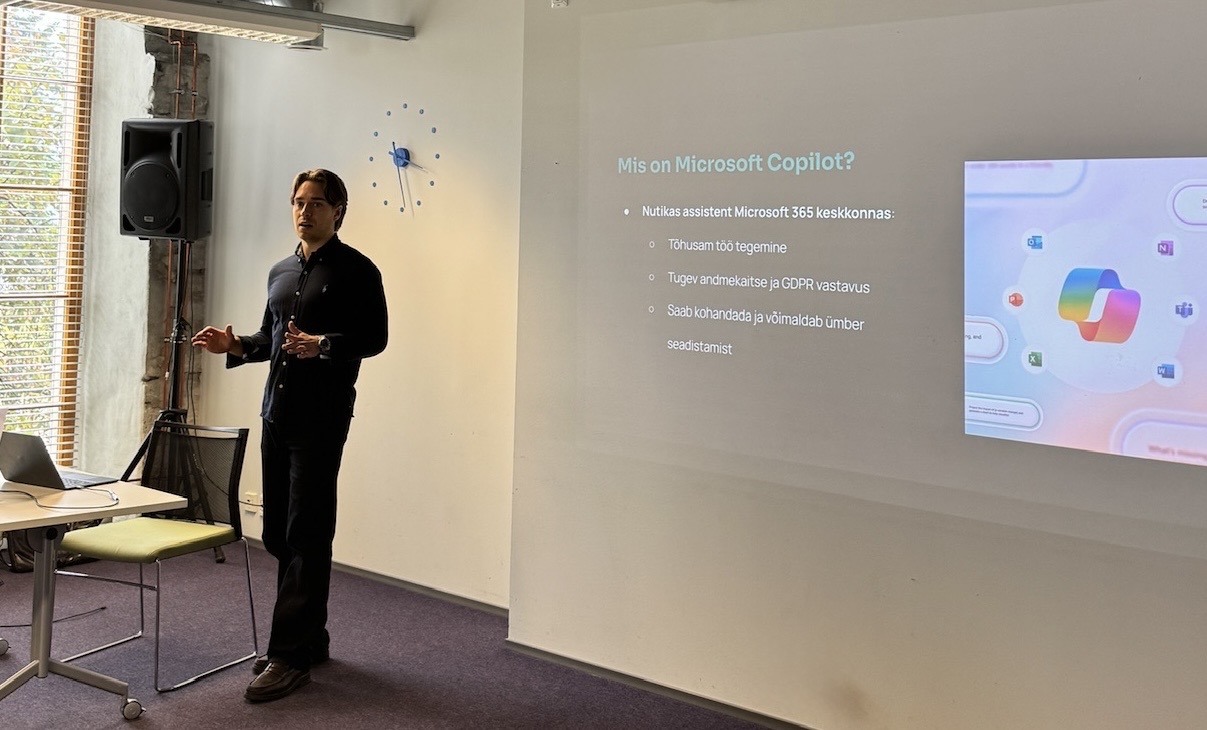
The use of artificial intelligence in Estonian companies is growing fast, yet many firms still don't know how to apply the technology in their business. The state offers a range of grants and advisory services to help companies plan and implement AI solutions.
According to AI Eesti co-founder Ralf-Stiven Viru, by not using the opportunities the state provides, Estonian companies are leaving at least €45,000 in grant money on the table. "A large share of companies still can't assess where AI would actually create value, even though the state offers tens of thousands of euros to accelerate company digitalisation and AI adoption. It's an untapped opportunity to start systematic AI implementation in your company," said Viru.
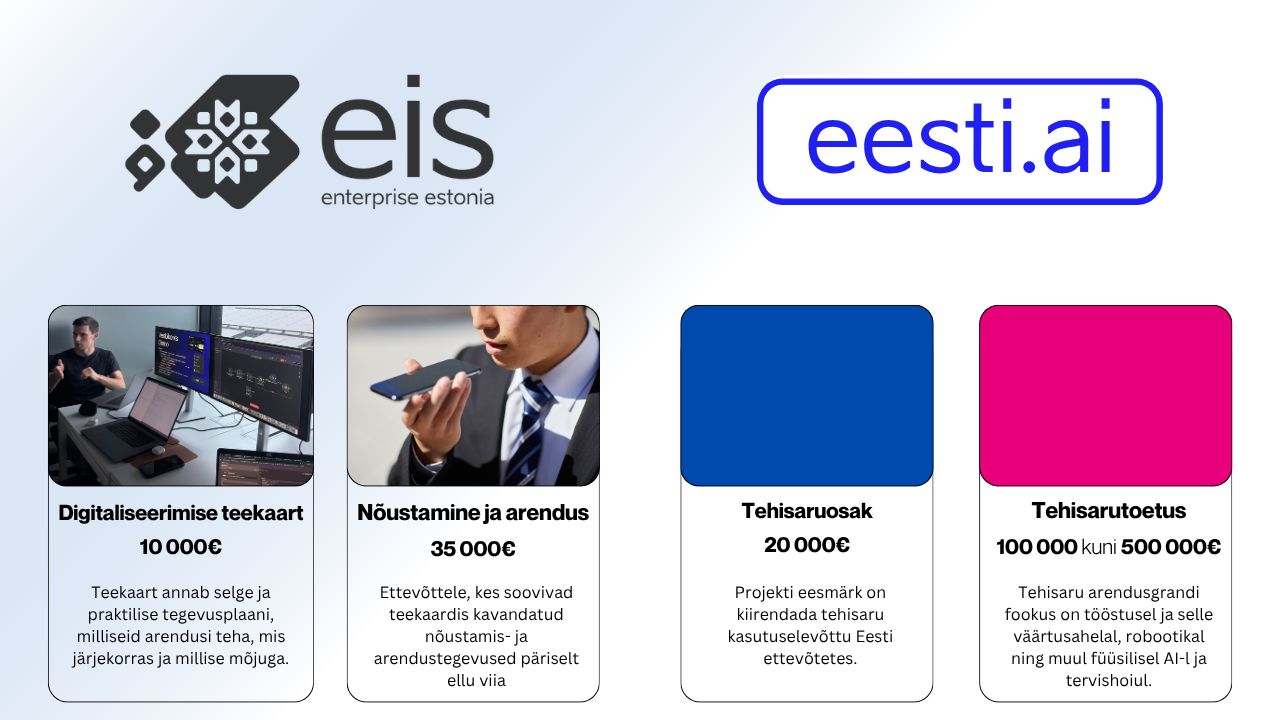
One of the main funders is the Enterprise and Innovation Foundation (EIS), and soon the Eesti.ai council will also begin coordinating grant distribution, offering an AI voucher and AI development grants. Through EIS, companies can apply for support to create a digitalisation roadmap and for development activities.
The digitalisation roadmap
According to Viru, companies could start by creating a digitalisation roadmap, for which they can apply for up to €10,000 in support. The roadmap's goal is to map the company's processes and find the places where digitalisation or AI could deliver the greatest benefit. The analysis assesses the company's digital readiness, reviews workflows, and produces an action plan for potential projects.
Development activity grant
If a company already has a concrete plan, it can apply for up to €35,000 in development activity support.
The development grant can be used, for example, to:
- develop AI-based solutions;
- add AI capability to existing software;
- connect AI tools with company systems;
- launch pilot projects;
- train employees to use the new solutions.
EIS support can be applied for by Estonian companies that have operated for at least two years and have a turnover of at least €200,000. The company must contribute 30–50% in co-financing.
While any company can create a digital roadmap with its own team, for development activities it's worth bringing in an experienced partner to help realise the vision. For AI-focused solutions, one such service provider is AI Eesti, which focuses on mapping companies' AI projects, applying for funding, and implementing solutions.
According to Viru, applying for funding is often difficult for companies, because AI projects are more complex than the average IT project and the client themselves may not even arrive at the right solutions. "We come into the client's company already in the first stage, assess how the company operates and what genuinely needs to change. We help the client from start to finish, until the solutions have delivered measurable impact."
How applying for funding works
The first step is finding the right grant. Together with the company, its digital maturity and project idea are reviewed. A prerequisite for development activities is preparing a digitalisation roadmap. It is also assessed whether different measures can be combined.
The second step is preparing the application. The project's goal is formulated to meet the funder's requirements, a detailed budget is drawn up, and metrics are set to later assess the project's impact. Metrics could be, for example, time saved, reduced costs, or improved process speed.
The third stage is implementing the project. For the roadmap, the company's processes are mapped and a concrete action plan is created. For development activities, the AI solutions are built, integrated with the company's existing systems, and employees are trained to use the new tools.
The fourth step is reporting, which is an important part of the process for grants. Support is usually paid out after costs are incurred, so the project must be documented and reports on the work done and results submitted to the funder.
In practice this means a company might progress along the following timeline: in the first stage a digitalisation roadmap and AI audit are prepared, in the next stage a development activity application is submitted, and then pilot projects are launched and employees are trained.
Such a process can take several months, but as a result a company may receive up to €45,000 worth of AI services, a significant share of which is covered by state grants.
The AI solutions frequently implemented during such projects include, for example, automating customer queries, document analysis, sales analytics, or automating a company's internal workflows.
According to Viru, faster AI adoption may be one way for Estonian companies to grow productivity. "Without conscious management and skills development, some companies may simply fall behind in technological progress. Over the next two to three years, a large share of Estonian companies will decide whether they adopt artificial intelligence to scale and grow, or stay waiting. Money isn't the problem — the lack of knowledge is," he said.
AI Eesti is a partner that helps you adopt artificial intelligence consciously and effectively. We offer strategic consulting and development to build a lasting competitive advantage.
This article was originally published on Geenius.