
Chatbots Are Being Replaced by AI Operating Systems
 Ralf-Stiven Viru, CEO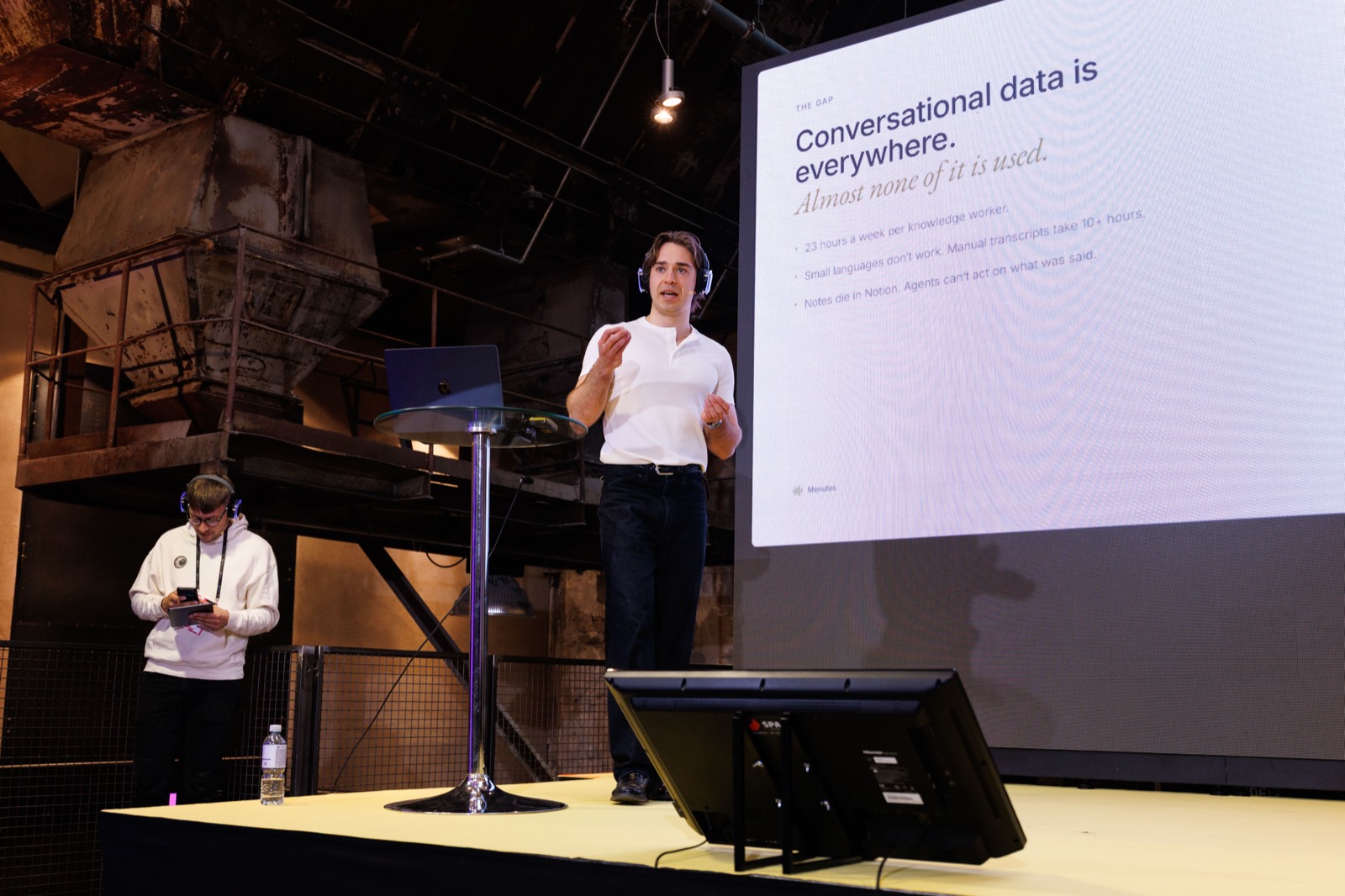
The first wave of artificial intelligence brought chatbots into companies. They helped write texts, answer questions, and find information. Today the chatbot has become an interface to a deeper system.
According to AI Eesti co-founder Ralf-Stiven Viru, successful companies see AI not just as a replacement for googling, but as a central part of their infrastructure. "It's a new operating system on which you can build the company's processes, decisions, and day-to-day operations," he explains.
One of the best examples of this shift is Anthropic's Claude model. The market's trust in this direction is shown by Anthropic's early-2026 Series G funding round, which raised 30 billion dollars and lifted the company's valuation to 380 billion dollars.
Managers and decision-makers then ask: how does this affect us, and what's the benefit?
1. Claude's advantages for a company
A large context window — the ability to see the whole picture
While an ordinary employee's short-term memory is limited to a couple of documents, Claude can handle a very large amount of information at once. This means the model can be given long documents, reports, contracts, or technical materials to analyse.
Why does this matter to a manager? You no longer have to feed the AI questions piece by piece. You can load in the company's annual budget, quarterly reports, legal contracts, or a large part of a product's codebase. The model analyses the information as a whole, spots contradictions, and draws conclusions while keeping focus on the details.
MCP: a bridge to the company's information systems
Company data is often fragmented. Something is in Teams, something in Jira, something in Google Drive, something in the CRM or financial software. Claude solves this with the Model Context Protocol (MCP). Anthropic created MCP as an open standard so that AI can securely connect to various tools and data sources.
Why does this matter to a manager? It means the AI doesn't have to work only on manually entered information. It can communicate with the company's existing systems, query data, and use tools.
The agent gets the task done
A chatbot gives an answer; an agent does the work. Claude is one example of a solution that can break a large problem into smaller steps, run tools, analyse results, fix errors, and hand a finished result to a person for approval.
2. What is an AI operating system?
An AI operating system is a central part of the digital infrastructure that ties the company's applications and data into a whole. It isn't just a standalone chatbot, but a system integrated directly into the company's data, tools, and everyday processes.
How does it work?
Unlike an ordinary chatbot that relies on the public internet, an AI operating system is in constant connection — via MCP and APIs — with internal databases, the CRM, financial software, and communication channels.
3. Use cases in sales, development, and management
-
After a client call, the sales manager doesn't have to add notes to the CRM by hand or write a follow-up. The AI listens through the meeting summary, updates the CRM, notes the client's interests and objections, and drafts a personalised follow-up. The sales manager reviews the message and confirms sending with one button.
-
A manager doesn't have to wait for teams to send reports. The AI consolidates sales, customer support, projects, and the calendar into one view. The manager asks: "What needs the most attention today?" The answer comes in seconds: "Client Y's problem affects the quarterly target. Two sales offers are awaiting a response. One important email needs an immediate reaction."
-
When marketing needs a campaign page or sales needs an internal calculator, a developer gives Claude Code the task. Claude Code creates the first version, finds the necessary files, adds the connections, and writes the tests. The developer reviews the result and confirms deployment. This way the same team can test new ideas and build internal tools faster.
4. Where to start?
Find an owner for the project
Someone has to be responsible for making sure the AI solution is secure and actually works. This can be an internal AI working group or an external partner. First, the tools, data, access rights, and processes need to be mapped. The AI isn't given access to everything at once. You should start with controlled use cases.
Train employees and show new ways of working
People are used to doing work the old way: searching for information by hand, copying data from one system to another, and producing repetitive summaries. The goal is to show that the same work can be done faster and better. When an employee sees a practical benefit, they become interested in using the new tools themselves.
When training employees, it's important to explain the functionality of Claude's different modes so that the right tool is chosen for each task:
- Claude Chat: Meant for quick questions and conversations. It's a baseline assistant for solving everyday queries.
- Claude Cowork: It plans tasks, reads and writes files in a local environment, and can manage multi-step processes — a true partner for automating repetitive work.
- Claude Code: A tool aimed at advanced users that works directly in the terminal and has deep access to projects. It may look intimidating at first, but it's suitable for everyone.
- Claude Design: A tool for designers and marketing teams. It can apply a company's designs and create prototypes and presentations.
Early starters have the advantage
According to Viru, the use of AI in companies is still in an early phase — but that's exactly why now is the best time to build a strategic advantage.
"Companies that start today are gathering the necessary context, building data layers, and creating automations. All of this takes time, because systems and new ways of working evolve gradually. Later it will be very hard for competitors to catch up that head start," Viru explains.
Ultimately it comes down to a simple but important shift in mindset. "A company doesn't need a better chatbot. A company needs a system it can genuinely build its business processes on," Viru sums up.
This article was originally published on Geenius.